Third-Party Billing Block in Germany: Drittanbietersperre
Short answer
In Germany, a third-party billing block (Drittanbietersperre) stops other companies from charging subscriptions, app purchases or tickets to your mobile bill. Under section 61(2) of the Telecommunications Act your provider must set it up free of charge when you ask. Request it in the app, portal or by phone, and dispute unknown charges within eight weeks.
You open your first German mobile bill and find a weekly charge from a company you have never heard of. Nobody in your household admits to signing up. This is common enough that the Bundesnetzagentur, Germany’s telecoms regulator, runs a dedicated complaints route for it under the keyword Drittanbieter, third-party provider. The fix for the future is a single free request to your mobile provider.
What third-party charges on a German mobile bill are
Third-party providers are companies other than your mobile operator that bill their services through your phone bill. The regulator’s own examples include paid app store purchases, public transport tickets, parking tickets, e-books, music and streaming services, small donations and subscriptions.
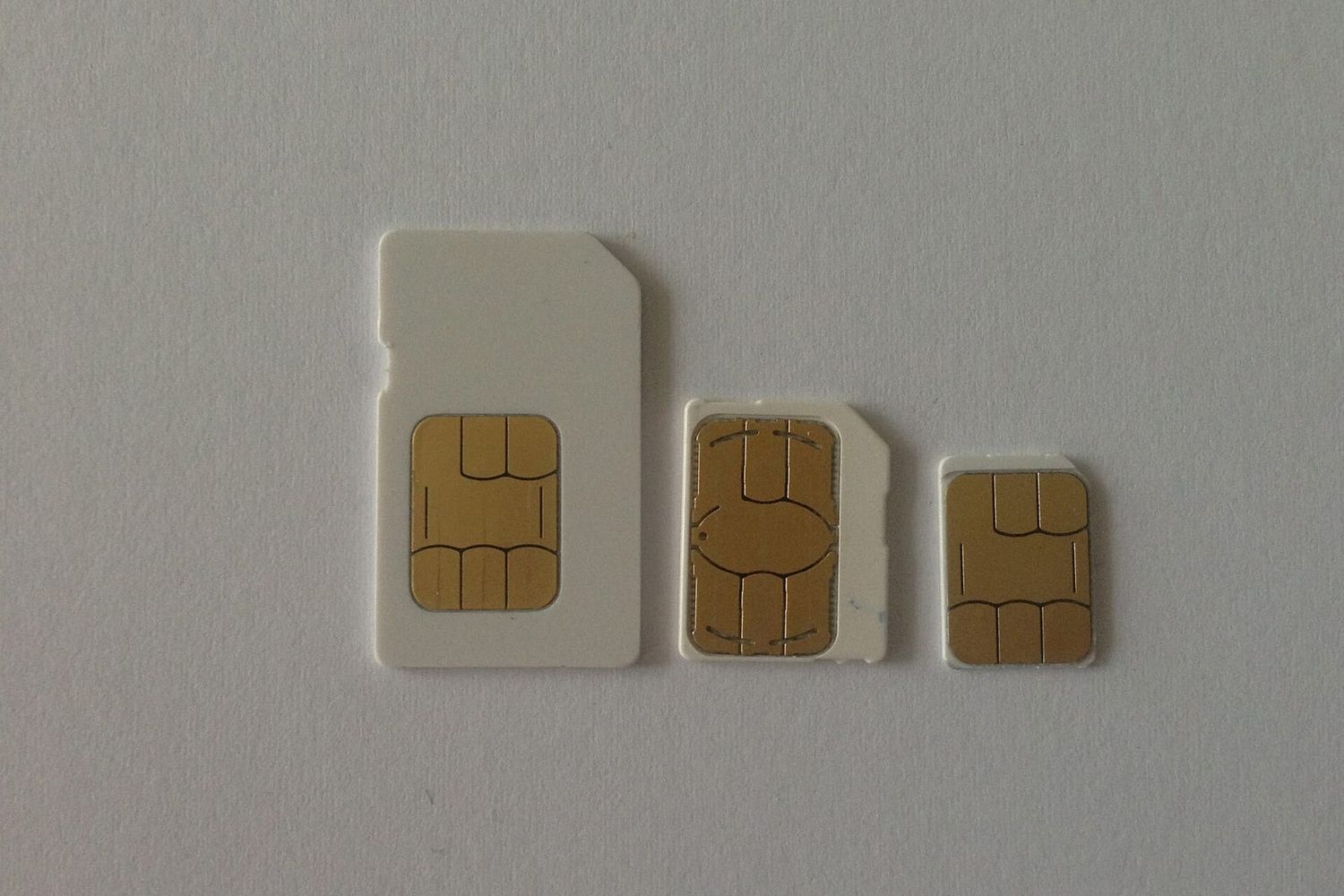
It works through your phone number. Every SIM card has a unique number, and when you pay “via mobile”, the purchase is matched to your line through it. Between the third-party company and your mobile operator there are usually technical intermediaries called aggregators.
For some services that is convenient. Paying for parking by text message is a typical example. The trouble starts with subscriptions you never consciously agreed to, often triggered by a tap on an ad. That is why German law gives you a right to block it entirely.
What the block stops and what it does not
| Criterion | Blocked | Note |
|---|---|---|
| Subscriptions billed to your phone | the main purpose | |
| App store purchases billed to your phone | card or PayPal still work | |
| Parking or transit tickets via phone bill | use an app with card payment instead | |
| Text-message donations | counted as third-party service | |
| Calls to 0900 or 0137 numbers | separate block under s. 61(1) | |
| Calls back to foreign numbers | ask your provider about barring |
Source: Section 61 TKG; Bundesnetzagentur, third-party providers
Two different blocks exist, and expats often mix them up. Section 61 of the Act gives you a right to have certain number ranges, such as 0900 premium numbers or short-code services, blocked on your line (paragraph 1), and a separate right to block the use of your mobile line for paying for services beyond the call itself (paragraph 2). That second one is the Drittanbietersperre. Both are free. They are separate requests, so ask for both if you want full protection. Our guide to German premium-rate numbers explains why the first one is worth having.
How to request the block, even with limited German
You have to request it yourself. German law gives you the right as soon as you ask, but it does not make the block the default, so every number you want protected needs its own request. Common routes are your provider’s app, its customer portal, the hotline or a shop.
If you prefer writing, a short message is enough. In German:
„Hiermit beauftrage ich Sie, für meine Rufnummer 0176 … eine vollständige Drittanbietersperre nach § 61 Abs. 2 TKG einzurichten. Bitte bestätigen Sie mir die Einrichtung schriftlich.“
In English that says: “I hereby instruct you to set up a full third-party block under section 61(2) TKG for my number 0176 …. Please confirm in writing.” Send it in German if you can; it removes any room for misunderstanding.
Keep the confirmation. If your contract includes several SIM cards, for a partner or a tablet, the block applies per number. Tablets and smartwatches with their own SIM have a phone number too, even if nobody makes calls with them.
According to the regulator, many providers also offer partial blocks for individual services or whole categories. My view: for children’s phones and for anyone who never pays via the phone bill, a full block is the right choice. If you use phone-bill parking, there is usually an app that takes a card instead.
The rules that apply even without a block
You are not unprotected without the block. In 2019 the regulator ruled, in order 108/2019, that from 1 February 2020 at the latest, third-party services may only be billed under one of two conditions.
Either there was a redirect: before charging, you are sent to a page run by your mobile provider where you explicitly confirm the purchase. That page may not show ads or distractions, and it may not suggest the offer is free. Or your provider uses the combination model. That combines the redirect with registration and login plus a money-back guarantee.
According to the regulator, the guarantee covers unnoticed and unwanted single purchases, and subscriptions where the redirect demonstrably failed. Purchases through a “trusted partner login”, where you sign in with a username and a second factor, are excluded. Mobile providers must publish their list of trusted partners on their websites.
You already have an unknown charge: getting your money back
- CheckRead the bill and ask anyone using the phone whether they know the provider.
- DisputeObject in writing to your mobile provider within eight weeks (s. 67 TKG).
- ObjectTell the third-party company too, and cancel any subscription as a precaution.
- Control paymentReverse the direct debit and pay the reduced amount, or pay the bill minus the charge.
- Block and reportSet up the Drittanbietersperre and complain to the Bundesnetzagentur.
The bill itself has to help you. Under section 62 of the Act, a bill with third-party items must show the third-party company’s name and address for service, a landline or freephone number and a website with an email address. Missing details are a reason to dispute the charge in themselves.
Your provider checks whether a guarantee case applies. You can also report the company to the regulator through its page on third-party providers (in German). It can take up individual cases and, for example, ban billing. Our guide to reporting scam calls in Germany explains how the regulator’s complaint forms work.
A note on payment, because it catches people out. Section 62 says that paying the full bill to your mobile provider also discharges you towards the third-party company. So if you do not want to pay the disputed amount, reduce the payment deliberately and tell your provider why. In Germany, direct debits (Lastschrift) can usually be reversed through your bank, after which you pay the undisputed part yourself.
Avoiding subscription traps
The regulator advises not to confirm pop-ups without reading them and not to click unclear links. Good advice, but slips happen, especially with children. The block is the more reliable protection. The regulator also warns, in a separate section, about fake pop-up error messages while browsing that push you to call supposed support hotlines.
For the rest of your phone hygiene, see how to block spam calls. And if you get one-ring calls from abroad, read about the one-ring scam, because the third-party block does not stop expensive callbacks.
If you sell digital services yourself, make billing transparent and cancelling easy. A SaaS development studio can build fair billing and cancellation into a product from the start.
Open your German mobile provider’s app today, or call the hotline, and request the Drittanbietersperre for every number on your contract.
Classify a number: Uses the prefix to tell whether a number is landline, mobile, a special-rate range or foreign, and roughly what calling back costs.
Questions people ask
What is the German word I should use with my provider?
Ask for a Drittanbietersperre. If you want to be precise, say you want a full block (vollständige Drittanbietersperre) under section 61(2) TKG for your number.
Does the block stop App Store or Google Play purchases?
Only purchases billed to your phone bill. The German regulator lists paid app store purchases as third-party services. If you pay with a card or PayPal, those purchases still work.
Is the Drittanbietersperre free?
Yes. Section 61(2) of the German Telecommunications Act requires mobile providers to set it up free of charge on request.
I already paid an unknown charge. Can I get it back?
Dispute it in writing with your provider within eight weeks of receiving the bill and object to the third-party company too. Your provider checks whether a money-back guarantee applies. A complaint to the Bundesnetzagentur can help as well.